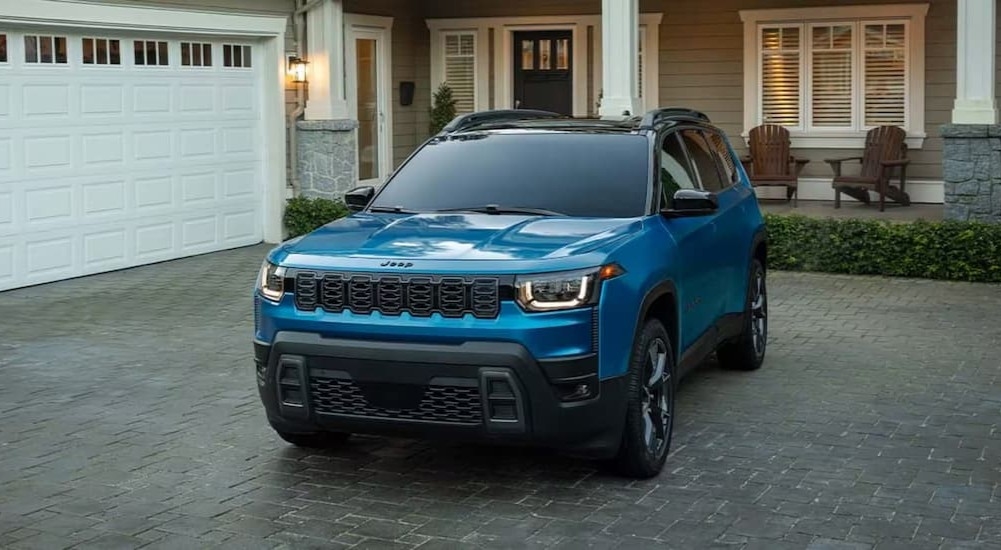
If you've ever searched for a Jeep Cherokee for sale, there's a good chance you've run into a moment of hesitation. You see the Cherokee…and then you see the Grand Cherokee. Same name, same brand, similar styling, but one's "Grand." What does that mean? Suddenly, it's not as straightforward as you expected, is it?
That confusion is completely fair. These two SUVs share Jeep DNA, but they're built for different drivers. And if you're trying to decide between them, the goal isn't to figure out which one is "better." It's to understand which one actually fits your life.
So let's break it down in a way that makes sense—not just on paper, but in how these vehicles feel and function day-to-day.
Size and Presence: Compact vs Midsize SUV
The most immediate difference between the Cherokee and the Grand Cherokee is size, and it's one you'll notice before you even get behind the wheel.
The Jeep Cherokee sits firmly in the compact SUV category. It's easier to maneuver, simpler to park, and generally more manageable if your daily driving involves tighter spaces or heavier traffic. For many drivers, especially those balancing commuting with occasional weekend trips, that size works in their favor.
The Grand Cherokee, on the other hand, moves into midsize territory. It's longer and wider, and it carries more presence on the road. You feel that difference not just in how it looks, but in how it handles space—both inside and out. It's the kind of SUV that feels more substantial, especially on longer drives or when you've got more people and gear along for the ride.
There's also the Grand Cherokee L, which introduces a third row for those who need even more passenger capacity. That's something the Cherokee simply isn't built to offer.
So right away, the question becomes pretty practical: do you want something that feels nimble and easy to live with every day, or something that gives you more room to stretch out?
Performance and Capability: Same Roots, Different Strengths
Both the Cherokee and Grand Cherokee come from a brand known for capability, and that's not just marketing—it shows up in how these SUVs are built.
The Cherokee is designed to strike a balance. It's capable of handling dirt roads, muddy trails, and less-than-ideal weather conditions without feeling overbuilt for daily driving. With available 4x4 systems, it's more than prepared for the kind of adventures most drivers actually take on. You're not sacrificing capability—you're just getting it in a more accessible, everyday-friendly package.
The 2026 Cherokee has a 1.6L turbocharged I-4 HEV powertrain with an electronic Continuously Variable automatic Transmission (CVT), meaning every trim is a hybrid that outputs 210 hp and 230 lb-ft of torque, with a maximum towing capacity of 3,500 lbs. It's also very fuel-efficient despite being an AWD vehicle, with EPA-estimated ratings of 39 MPG in the city, 35 MPG on the highway, and 37 MPG combined—an estimated 507-mile range on a full tank.
The Grand Cherokee builds on the Cherokee's foundation. It offers more powertrain options, including stronger engines that deliver great towing capability and more overall muscle. This includes a 3.6L Pentastar V6 and a 2.0L Hurricane turbocharged I-4 engine, both of which pair with an 8-speed automatic transmission and have a maximum towing capacity of 6,200 lbs. The V6 outputs 293 hp and 260 lb-ft of torque, while the turbocharged I-4 provides 324 hp and 332 lb-ft of torque.
The Grand Cherokee comes standard with RWD, but 4WD is optional and doesn't affect your fuel economy ratings as much as you might think. With the turbocharged I-4 coupled with 4WD, it produces an impressive 21 MPG in the city, 26 MPG on the highway, and 23 MPG combined. Both are exceptional vehicles in their own right, but if your needs lean toward hauling, towing, or pushing further off the beaten path, the Grand Cherokee's added strength becomes more noticeable.
It's helpful to think of it this way: the Cherokee is capable in ways that fit most lifestyles, while the Grand Cherokee is built for those who regularly ask more of their vehicle. Both can handle a trail—but one is more likely to do it occasionally, while the other is built with that expectation in mind.
Interior Space and Comfort: Practical vs Expansive
Step inside each SUV, and the differences in size start to make even more sense.
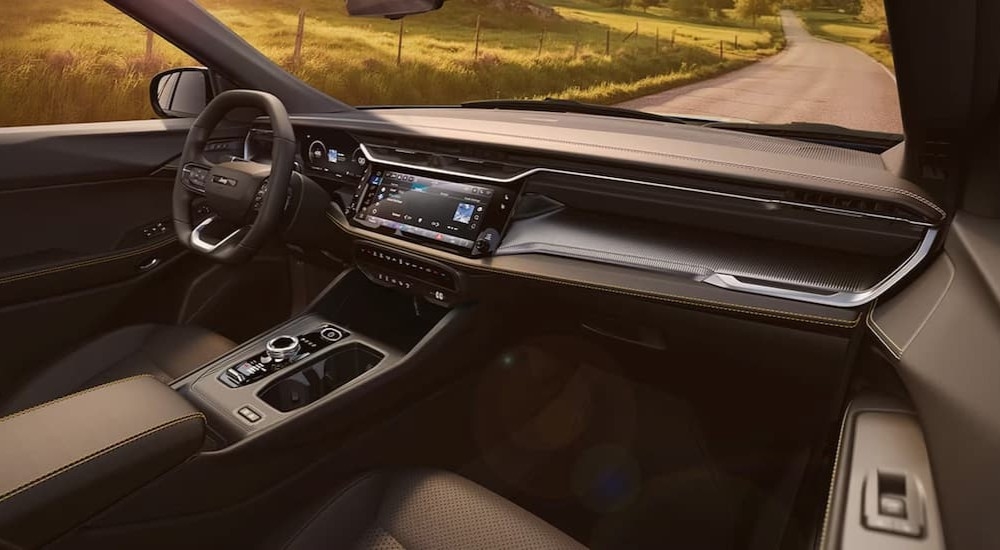
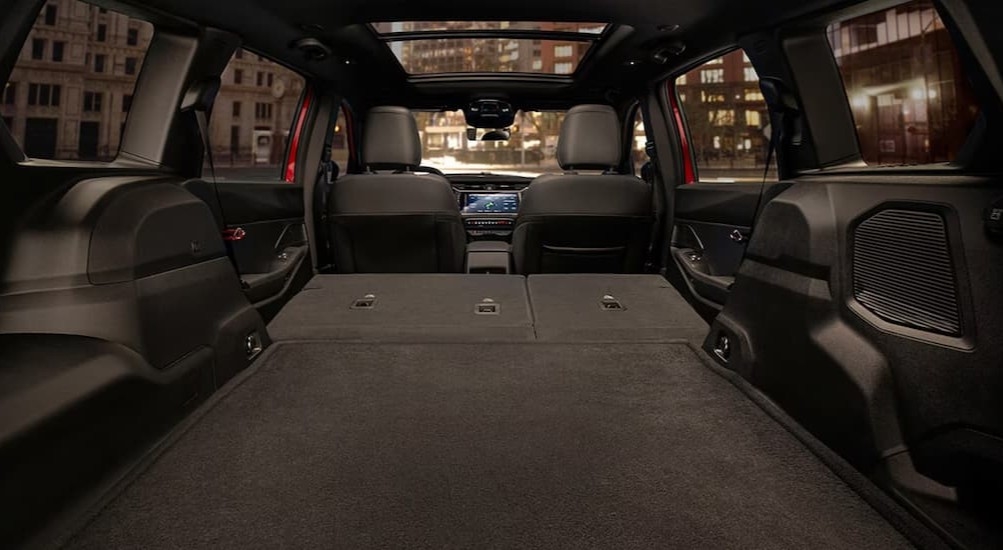
The Cherokee offers a comfortable, well-organized interior that suits individuals, couples, or small families. Everything feels within reach, and the space is used efficiently. It's not oversized, but it doesn't feel cramped either—it's designed to support your day-to-day routine without excess. Using a base 2026 Cherokee as our reference point, it has 40.3 inches of front row headroom and 41.3 inches of legroom, with the second row having 40.2 and 38.5 inches of head and legroom, respectively. It also has 33.6 cu.ft of cargo space behind the second row, which expands to 68.3 cu.ft when the rear seats are folded.
The Grand Cherokee leans more into space and refinement. Aside from the option of carrying more passengers with a three-row Grand Cherokee, the extra cargo capacity when you need to load up for a trip is much appreciated. On longer drives, the 2026 Grand Cherokee—using a base trim (Laredo) for our reference—is a comfortable ride, with 39.9 and 41.3 inches of front head and legroom—39.4 and 38.2 inches for second-row passengers. Even models with a third row offer an enjoyable ride for the passengers seated furthest back, with the three-row Laredo featuring 37.3 and 30.3 inches of head and legroom.
As for cargo room, the 2026 Grand Cherokee with two rows has 37.7 cu.ft behind the second row, increasing to 70.8 cu.ft when the rear seats are folded. And for those interested in a three-row model, the 2026 Grand Cherokee L has 17.2 cu.ft. behind the third row and 46.9 cu.ft. behind the second row, and 84.6 cu.ft with both rows folded. But what if numbers don't mean anything to you and you care about real-world usage? Well, take our word for it: these measurements translate directly to a spacious, comfortable, and versatile SUV experience, regardless of whether you buy the Cherokee or Grand Cherokee.
Technology and Features: Familiar, With Room to Grow
From a technology standpoint, both SUVs are built on a similar foundation. You'll find modern infotainment tech, with a 12.3-inch infotainment center standard with both SUVs. However, available Grand Cherokee trims feature a dedicated passenger display—a 10.25-inch screen that lets your passenger watch content, access media controls, and help with navigation, and much more. It basically makes the front-row passenger feel more like a co-pilot than anything else, and if that's not your thing, it's a great screen for watching their favorite shows or YouTube videos on long trips.
Of course, the 2026 Cherokee and Grand Cherokee include modern smartphone integration with wireless Apple CarPlay and Android Auto. There's also a suite of driver-assist features in both SUVs designed to make driving easier and more intuitive, including Active Lane Management, Blind Spot Monitoring, Rear Cross Path Detection, and more.
The Cherokee covers the essentials well. It gives you what you need without overcomplicating things, and we're big fans of this SUV. It's exactly what many buyers are looking for. The interface is straightforward, connectivity is easy to use, size is manageable, and the overall experience feels approachable.
The Grand Cherokee builds on that same foundation with more available upgrades. You get extra tech features, performance upgrades, and, above all else, a much larger, more spacious ride. However, remember that it's not that the Cherokee is lacking; it's just that these two SUVs are for different groups, even though they appeal to fans of the same brand.
What's the Best Choice for You?
Now it's time we answer the burning question: what's the best choice for you? The truth is that you've likely known the answer all along.
If your daily routine involves commuting, running errands, and the occasional weekend escape, the Cherokee makes a lot of sense. It's easy to handle, capable when you need it to be, and doesn't feel oversized for everyday driving.
If you regularly travel with more passengers, need extra cargo space, or plan to tow and take on more demanding conditions, the Grand Cherokee starts to feel like the better fit. It's built to handle those added responsibilities without compromise.
Neither one is the "upgrade" over the other—they're just designed with slightly different priorities in mind. So, if you're exploring a Jeep Cherokee for sale, understanding that difference puts you in a much better position to choose confidently. Because in the end, it's not about picking the more popular SUV—it's about finding the one that actually fits your life.